 Image 1 of 1
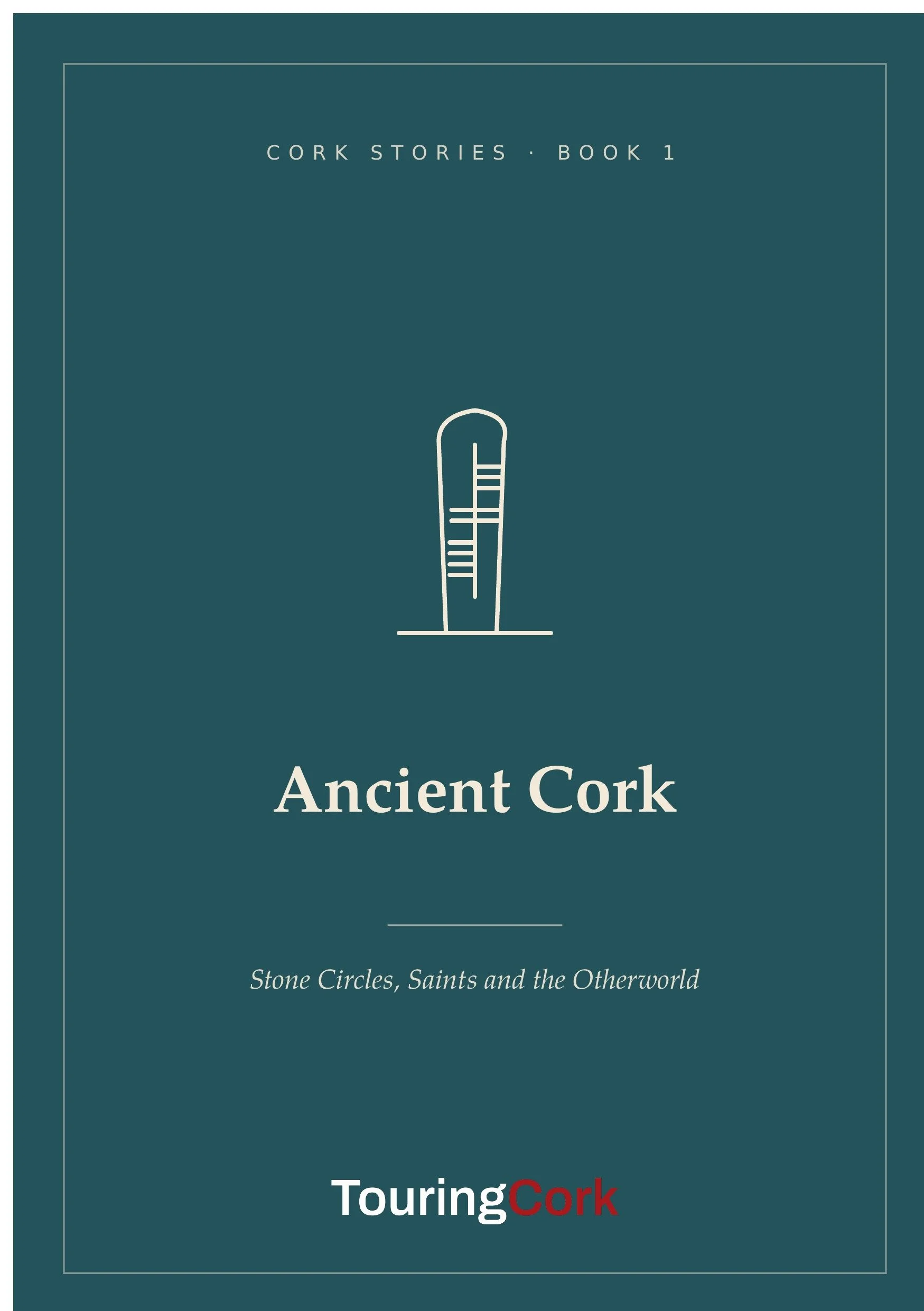
Cork began long before the city did. This book walks the county's deep past, from the recumbent stone circle at Drombeg, set to catch the midwinter sun, to the holy wells that pagans and Christians both claimed. You will meet the sovereignty goddess and the Cailleach, the Bronze Age miners of Mount Gabriel, the ogham carvers, and St Finbarr, who founded a monastery on the marsh that grew into Cork. Thirteen chapters trace the long switch from the old gods to the new faith, and the sites where both still meet. Illustrated throughout. Digital download (PDF).
What's inside:
Prologue: Drombeg at Midwinter
1. The Map Before the Saints
2. The People of the Goddess
3. The First Farmers and the Dead
4. The Circle Builders
5. The Metal Kingdom
6. Iron, Fort and the Coming of the Gaels
7. Writing on Stone
8. The Wheel of the Year
9. The Coming of the Cross
10. The Age of Saints and Scholars
11. The Wells That Changed Their Names
12. One Stone, Two Faiths
13. The Forts of the Hidden People
Epilogue: The Hill at Sunset
76 pages, illustrated throughout.
From the opening pages:
On 21 December, at sunset, the light enters the Drombeg stone circle from the southwest. The sun sits at its lowest arc of the year, the winter solstice, the day with the fewest minutes of light, the day the year turns and begins, slowly, to climb back. As the sun sinks toward the horizon, its last light passes over the rim of the recumbent stone, the long flat stone laid at the southwest of the ring, and falls across the two portal stones at the northeast, the entrance, the direction from which a visitor approaches. The alignment has been working for around three thousand years.
The circle at Drombeg, on a low hill above the sea near Glandore in west Cork, has seventeen stones set in a ring about nine metres across. The recumbent stone is flanked by two of the tallest uprights in the ring, and the other stones step down in height around the circle, so the whole thing seems to bow toward the point on the horizon where the midwinter sun goes down. When archaeologists excavated the circle in 1957 and 1958, they found a cremated human burial at its centre, the burnt bones placed in an inverted pot, and a radiocarbon date on the associated material put the burial between about 1124 and 794 BC.
Cork began long before the city did. This book walks the county's deep past, from the recumbent stone circle at Drombeg, set to catch the midwinter sun, to the holy wells that pagans and Christians both claimed. You will meet the sovereignty goddess and the Cailleach, the Bronze Age miners of Mount Gabriel, the ogham carvers, and St Finbarr, who founded a monastery on the marsh that grew into Cork. Thirteen chapters trace the long switch from the old gods to the new faith, and the sites where both still meet. Illustrated throughout. Digital download (PDF).
What's inside:
Prologue: Drombeg at Midwinter
1. The Map Before the Saints
2. The People of the Goddess
3. The First Farmers and the Dead
4. The Circle Builders
5. The Metal Kingdom
6. Iron, Fort and the Coming of the Gaels
7. Writing on Stone
8. The Wheel of the Year
9. The Coming of the Cross
10. The Age of Saints and Scholars
11. The Wells That Changed Their Names
12. One Stone, Two Faiths
13. The Forts of the Hidden People
Epilogue: The Hill at Sunset
76 pages, illustrated throughout.
From the opening pages:
On 21 December, at sunset, the light enters the Drombeg stone circle from the southwest. The sun sits at its lowest arc of the year, the winter solstice, the day with the fewest minutes of light, the day the year turns and begins, slowly, to climb back. As the sun sinks toward the horizon, its last light passes over the rim of the recumbent stone, the long flat stone laid at the southwest of the ring, and falls across the two portal stones at the northeast, the entrance, the direction from which a visitor approaches. The alignment has been working for around three thousand years.
The circle at Drombeg, on a low hill above the sea near Glandore in west Cork, has seventeen stones set in a ring about nine metres across. The recumbent stone is flanked by two of the tallest uprights in the ring, and the other stones step down in height around the circle, so the whole thing seems to bow toward the point on the horizon where the midwinter sun goes down. When archaeologists excavated the circle in 1957 and 1958, they found a cremated human burial at its centre, the burnt bones placed in an inverted pot, and a radiocarbon date on the associated material put the burial between about 1124 and 794 BC.