

Nano Nagle could have spent her life in Paris. Her people were wealthy Catholic gentry from near Mallow, rich enough to send their children to France for the education the Penal Laws denied them at home, and she grew up in the salons, comfortable, clever and a long way from the lanes of Cork. Then she came home, walked through those lanes, and spent the rest of her life in them. The people of the south side gave her a name that has outlasted every title the Church has offered since: the lady with the lantern.
The city she came back to
The Cork she returned to in the 1740s had some of the worst poverty of any town in Ireland, packed into the marshy lanes off the south channel. Thousands of Catholic children got no schooling at all, because teaching them was against the law. A Catholic schoolmaster could be transported for it. Nagle was a woman with money, connections and a well-placed family, and she looked at the lanes and decided this was the thing she could change. She kept her plan from her own brother for as long as she could, because he would have stopped her.
The schools by candlelight
In 1754 she opened her first school in a rented mud cabin on Cove Lane, off Douglas Street, with about thirty girls. She told almost nobody. Within a few years she had seven schools running across the city, teaching some four hundred children at a time, boys as well as girls, and she paid for every one of them out of her own pocket. She walked to each school in turn through the day, and in the evenings she went out again into the lanes with a lantern to visit the sick and the old, which is how the nickname started. The lantern is cut into the paving around Douglas Street today, and it is the emblem of the heritage centre that now stands on the ground of her convent.

"If I could be of any service in saving souls in any part of the globe, I would willingly do all in my power."— Nano Nagle, letter, c. 1770
The Presentation Sisters
She tried first to bring in an established order to carry the work on, and paid to bring the Ursulines to Cork in 1771. They were bound by their rule to stay inside the convent, which was no use to a woman who wanted teachers out in the lanes. So in 1775, at fifty-seven, she founded her own: the Society of Charitable Instruction, which became the Presentation Sisters. Her instructions were simple. Stay among the poor, teach, nurse, be present. She died on 26 April 1784, aged sixty-five, worn down by thirty years of walking, and was buried in the grounds of her convent on Douglas Street, where she still lies. The Presentation Sisters went on to work in more than forty countries, nearly always in the kind of place Cork's lanes were in 1754.

What she left behind
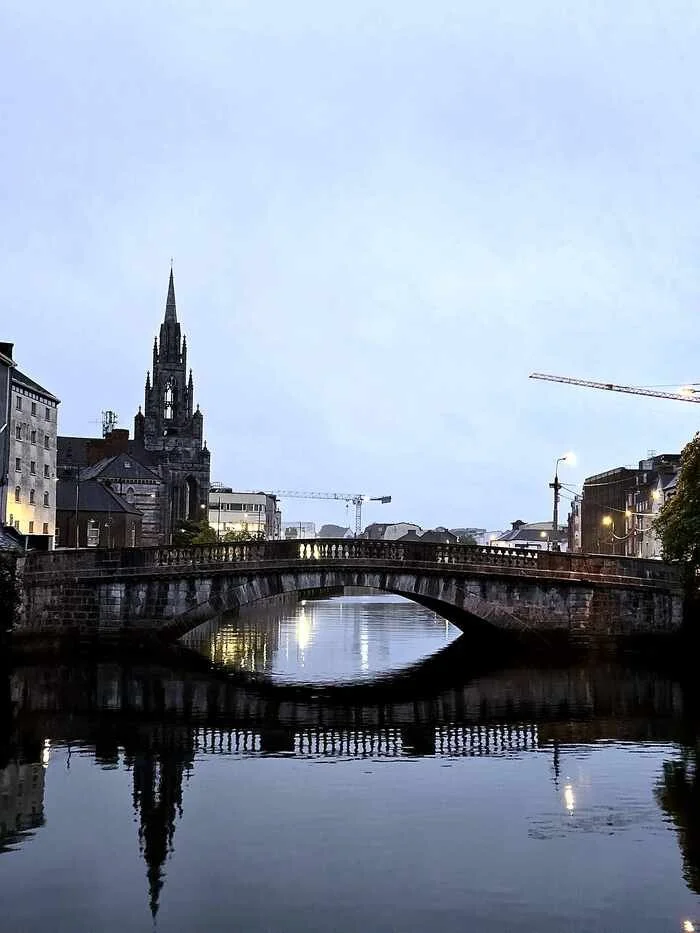
The influence is easy to trace. The girls she taught in the 1750s and 1760s raised children who could read, who taught their own children, in a city where Catholic schooling had been illegal for a hundred years. She built something that survived her and multiplied. In 2013 the Church declared her Venerable, the first formal step towards sainthood, and the process is still grinding on in Rome. Cork has never needed Rome to tell it what she was. The bridge over the south channel by her convent carries her name, and so does half the schools in the county.
On the walk
Nano Nagle Place, the heritage centre on Douglas Street, sits on the grounds of her original convent and is worth an hour on its own, with a good café in the old walled garden. On the walk we pass through the area of the lanes where her schools were hidden and explain the Penal Laws: what they meant, why they worked, and why they did not stop her. Look for the lantern in the paving.
Further reading
- Nano Nagle Place — the heritage centre on Douglas Street, Cork, with café and museum
- Wikipedia: Nano Nagle — her life, the Presentation Sisters, and the beatification process
- Presentation Sisters Union — the congregation she founded, now working in over 40 countries