

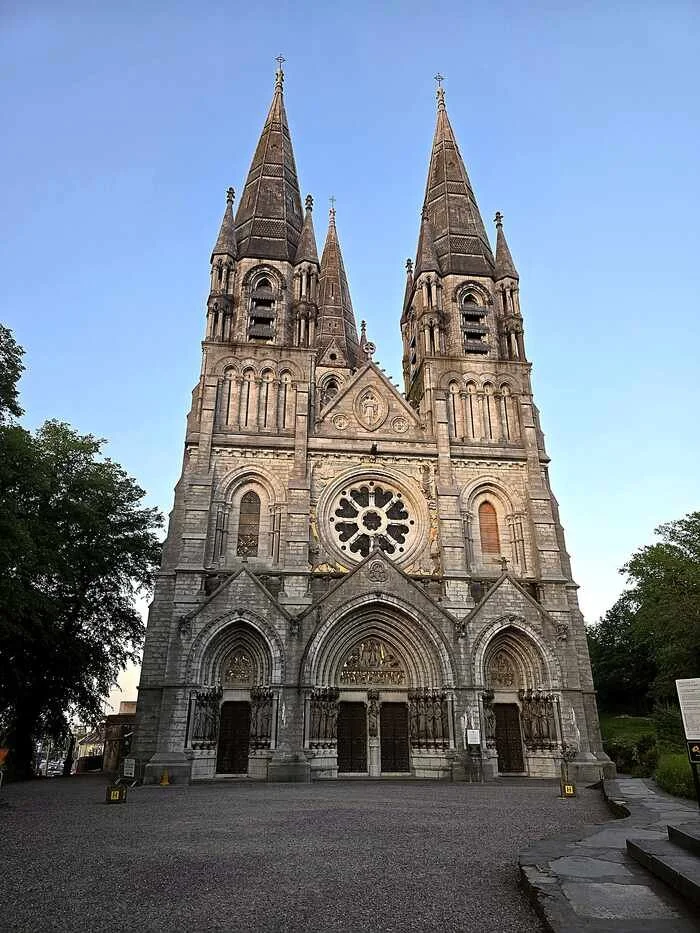
The grandest building in Cork was designed by a short-sighted Londoner who dressed up in medieval costume at home and never quite forgave the nineteenth century for happening. William Burges was thirty-five and barely known when he won the competition for St Fin Barre's Cathedral in 1862, with a design far bigger than the £15,000 the committee had to spend. He talked them into it. Then he spent the rest of his life making sure they got exactly what he had drawn.
The Victorian dreamer
Burges was born in London in 1827, the son of a rich civil engineer, which meant he never had to build for money and rarely did. He fell in love with the Middle Ages as a young man and spent his career trying to build his way back into them. While the rest of Victorian Britain was chasing railways and iron, he wanted carved stone, gold leaf, painted ceilings, saints and monsters. He kept the same small team of craftsmen for years, men who could turn his dense, odd drawings into stone and glass, and on few buildings did he get as free a hand as he got in Cork.
One mind, every detail
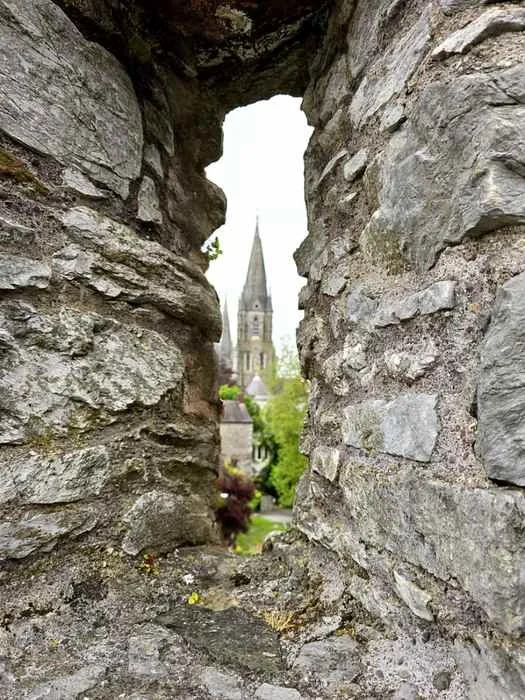
He designed nearly everything in St Fin Barre's himself: the three spires, the floor tiles, the pulpit, the metalwork, the furniture, the door handles. There are more than a thousand pieces of sculpture on the building inside and out, angels, prophets, beasts and whole Bible stories, and Burges drew every one of them. Look up inside and the painted ceiling is his too. High on the east end he set a Resurrection Angel sheathed in gold, and Cork decided long ago that when the end of the world comes, the angel will blow its trumpets and this city will get the news first.

"He gave Cork three spires, a thousand carvings and a golden angel, and never built anything he loved more."— Told on the walk
Cork and beyond
St Fin Barre's was his first great commission and it made his name. The Marquess of Bute, the richest man in Britain, saw what he had done in Cork and handed him Cardiff Castle to remake and then Castell Coch, a fairytale castle in the woods above the city, to build from a ruin. Both are as theatrical as anything in Victorian architecture. Burges died in 1881, at fifty-three, in the gothic house he had built for himself in London, with most of his wilder schemes still on paper. The cathedral on the Lee is the one he saw finished, and it stands on the oldest holy ground in the city.

He was as strange as his buildings. Short, half blind without his glasses, and fond of medieval fancy dress, he filled his own house with painted furniture, gilded ceilings and carved animals, and lived inside the dream he sold his patrons. He worked slowly and built little, but what he built he finished to the last hinge, and his handful of buildings are treasured now because nobody else thought the way he did. In Cork his hand is on everything in the cathedral. The further in you go and the higher you look, the more of him you find.
On the walk
We stop below the three spires of St Fin Barre's and tell the story of the man who designed every inch of it, and we find you the golden angel he set on the roof to warn Cork first.
Further reading
- Wikipedia: William Burges — the architect and his work
- Wikipedia: St Fin Barre's Cathedral — the building he gave his life to
- Saint Fin Barre's Cathedral — visiting the cathedral today